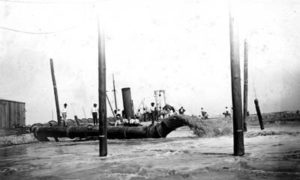
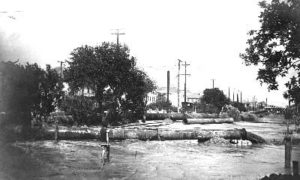
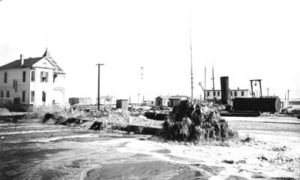
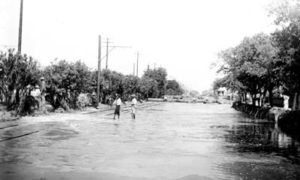
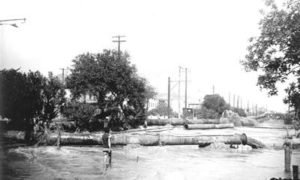
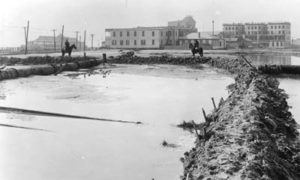
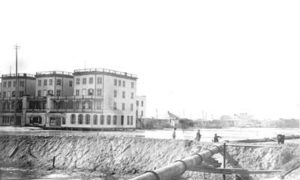
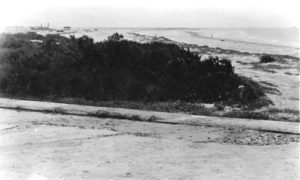
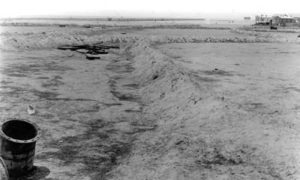
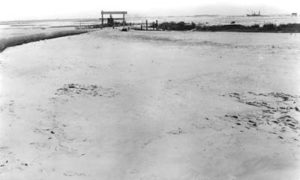
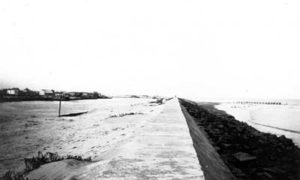
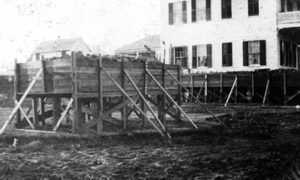
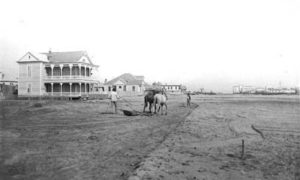
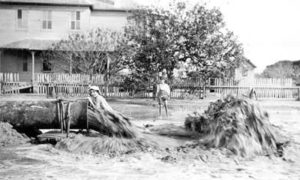
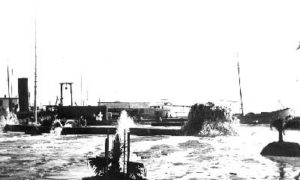
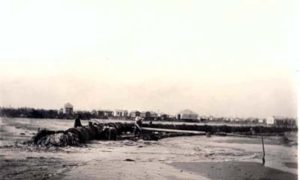
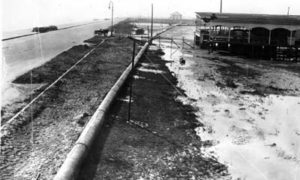
The grade raising, like the seawall, was a technological transformation. Conducted between 1904 and 1910, it radically altered Galveston’s appearance. It involved some 3,000 structures, including churches, schools, and residences. St. Patrick’s Church, displacing 3,000 tons, was the largest structure raised. It was elevated 5 feet through the employment of 700 jacks. This series includes several views of the raising of St. Patrick’s, as well Grace Episcopal Church Ursuline Convent. Street railway tracks were raised and fill piped in under them. The tracks sometimes had to be elevated to traverse the pipelines. However, streets and sidewalks were buried beneath fill. Residents had to pay for their replacement and for the raising of their houses.



(409) 763-8854 ext. 126
gthc@rosenberg-library.org
Galveston and Texas History Center
Rosenberg Library
2310 Sealy Avenue
Galveston, TX 77550
Open Tue-Sat 10-5
Directions & Maps