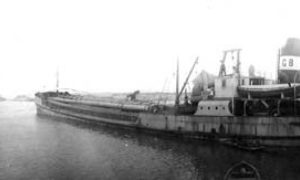
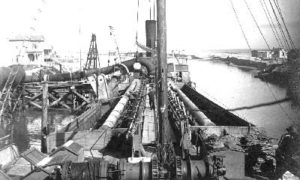
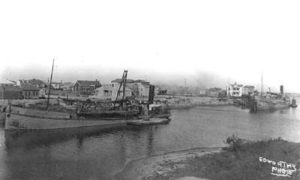
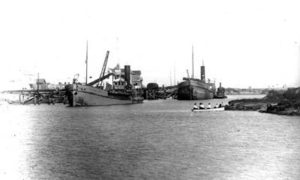
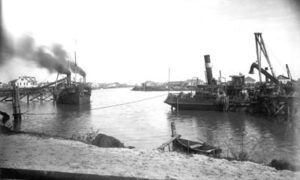
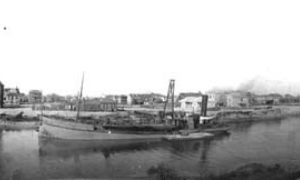
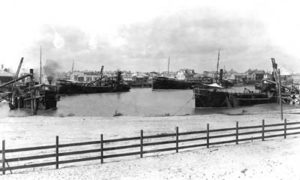
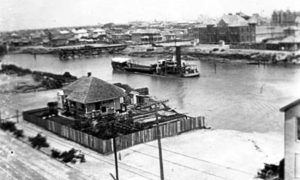
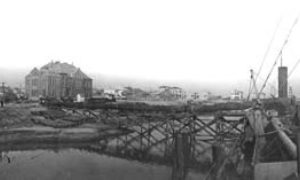
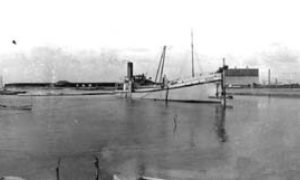
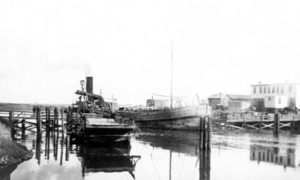
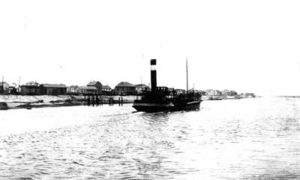
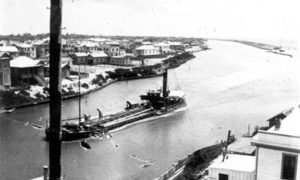
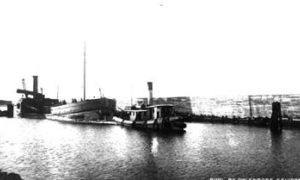
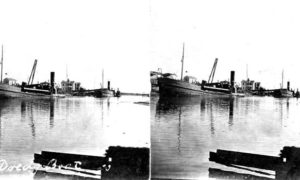
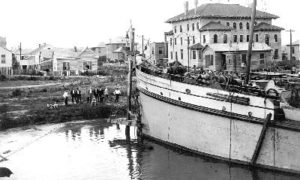
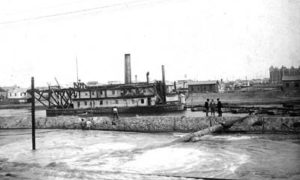
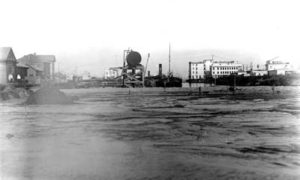
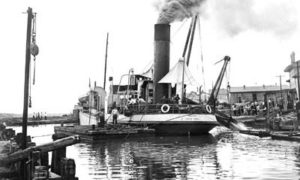
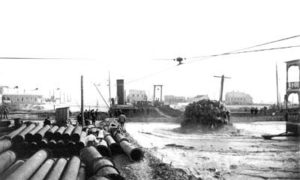
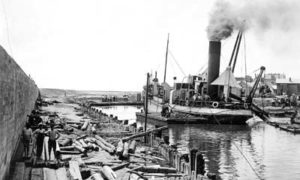
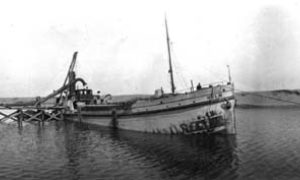
In July 1904, dredges began digging the grade raising canal through Galveston. The canal ran for 3 miles from Galveston Bay near the inner end of the south jetty and then turned east and south into the interior of the city, running along the length of the Seawall. Turning basins were sited at Avenue N ½ and 14th Street and between 31st and 33rd streets on P½. A drawbridge at 23rd Street allowed wagons and foot traffic to cross the canal. Pilings lining the canal prevented fill from running into it.
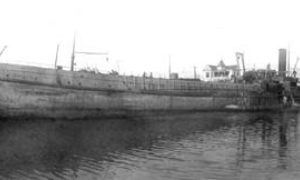
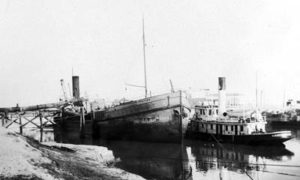
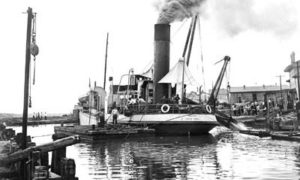
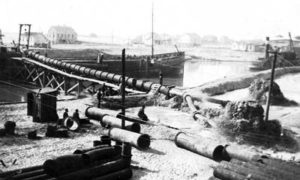
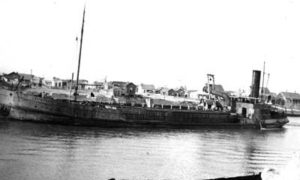
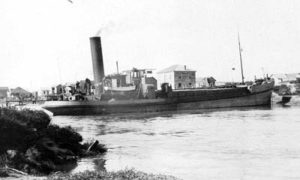
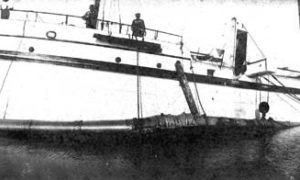
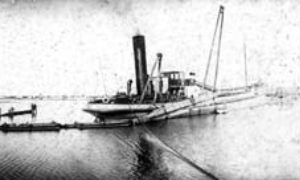
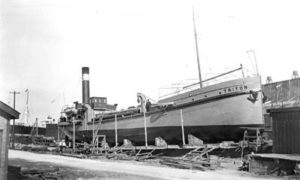
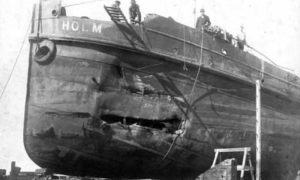
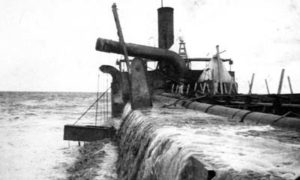
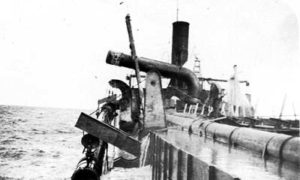
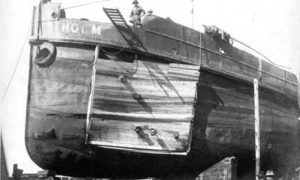
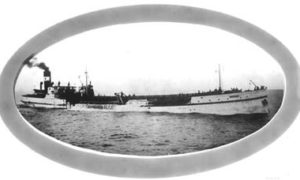
Four hopper dredges, built in Germany, removed slurry (a mixture of sand and water) from the bottom of Galveston Bay. The dredges proceeded through the canal, stopping at discharge stations where they released the slurry through pipelines that ran to the areas awaiting fill. The first dredge to arrive was Holm, followed by Leviathan, which came in December 1904. Triton and Nereus arrived in 1906. The largest dredge was Leviathan.



(409) 763-8854 ext. 126
gthc@rosenberg-library.org
Galveston and Texas History Center
Rosenberg Library
2310 Sealy Avenue
Galveston, TX 77550
Open Tue-Sat 10-5
Directions & Maps